 Combinator
Interfaze vs Reducto
The whole OCR pipeline in one API call.
One API call does OCR, classification and translation, and returns structured JSON. Every response also includes the OCR underneath, with bounding boxes and a confidence score for each word.
Trusted by builders at
















Why teams choose Interfaze over Reducto
Bounding boxes and confidence scores you can check, the whole pipeline in one call, better reads on hard scans, and a smaller bill.
Interfaze vs Reducto on the same document
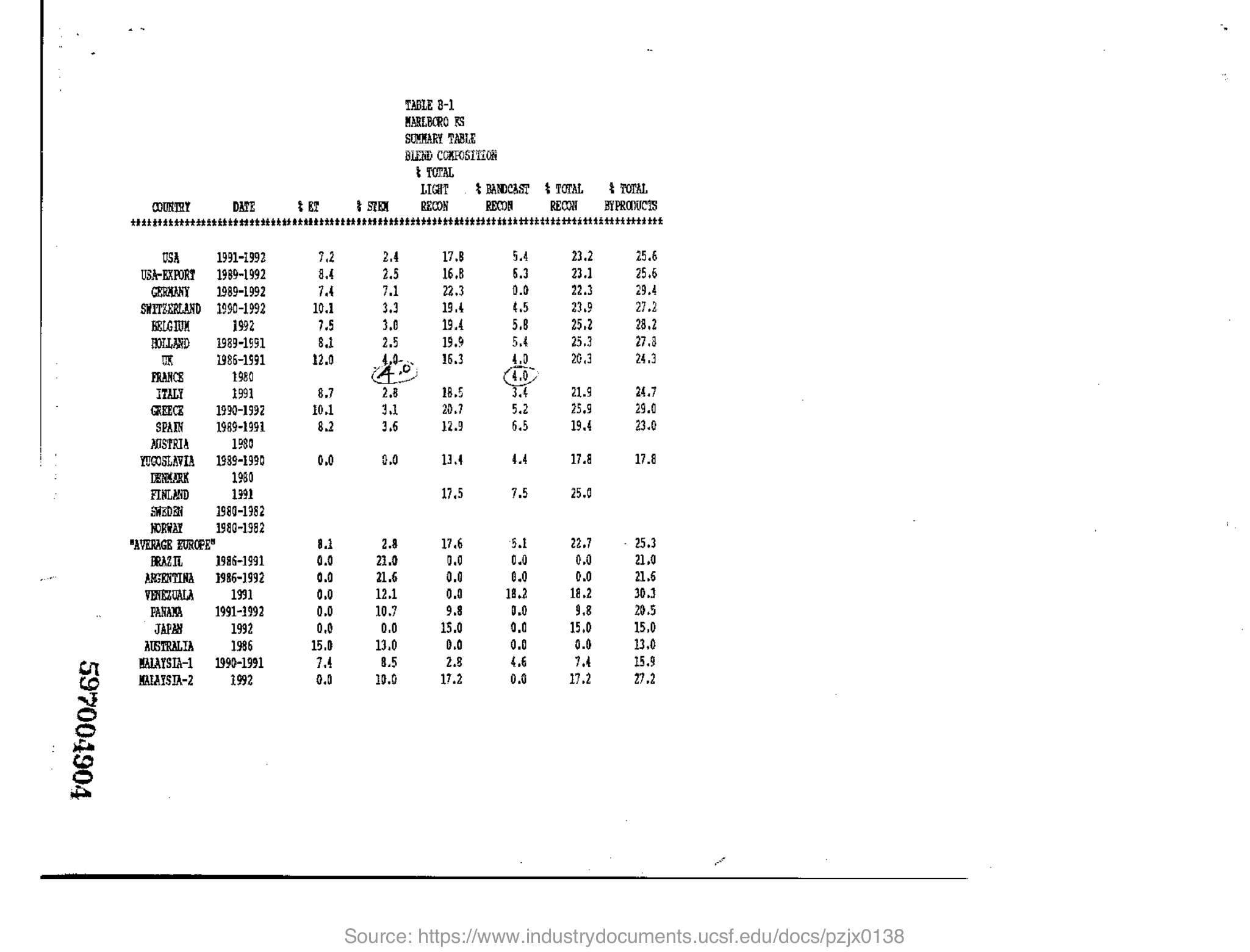
Same pages and same fields, sent to both APIs. These are pages where interfaze-1 got more fields right. Pick one to see where each API placed its fields, or the JSON it returned.
Rotated table scan
Dark cover scan
Faint campaign form
Boxes on the page
Returned JSON
correct value and box
wrong value, broken text or bad box
Interfaze · interfaze-1
Reducto · r-1
 Interfazeinterfaze-1
structured JSON
✓
usa_total_byproducts
25.6
0.99
✓
germany_light_recon
22.3
0.99
✓
venezuela_bandcast
18.2
0.97
✓
average_europe_total_recon
22.7
0.99
✓
malaysia2_light_recon
17.2
0.99
✓
finland_total_recon
25.0
0.98
✓
side_number
597004904
0.99
 Reductor-1
structured JSON
✗
germany_light_recon
22.3
Right value, but the box is on the Switzerland row.
0.95
✗
venezuela_bandcast
18.2
Right value, but the box is on the 18.2 in the Total Recon column.
0.99
✗
malaysia2_light_recon
17.2
Right value, but the box is on the 17.2 in the Total Recon column.
0.99
✗
side_number
597004905 · page says 597004904
0.86
✓
usa_total_byproducts
25.6
0.99
✓
average_europe_total_recon
22.7
0.99
✓
finland_total_recon
25.0
0.99
One API call instead of a pipeline
OCR docs ->
Both take a few seconds per page. With Interfaze you drop the extra APIs and the code that stitches them together.
Global documents
Claims intake
integration steps
1 call · 1 API
waiting
0/5 steps · 0 APIs
waiting
Scanned form
Parse
Classify
Translate
Q&A
Your code
Interfaze
One request
Structured output
1 call · 1 API
waiting
0/5 steps · 0 APIs
waiting
Scanned form
Parse
Classify
Translate
Q&A
Your code
Interfaze
Structured output
Interfaze vs Reducto accuracy benchmarks
Where interfaze-1 beats Reducto r-1 on the same documents, checked by hand: confidence scores you can act on, boxes on the right cell, and hard-to-read text.
higher is better
Content
Interfaze
Reducto
Errors flagged by confidence
wrong answers scored below 0.9, so they reach review · 11 vs 10 errors
100.0%
20.0%
Box on the right table cell
field box on the cell the value came from · 8 table fields
87.5%
50.0%
Rotated, upside-down & faint text
upside-down pages, rotated margin numbers, faint stamps · 15 fields
73.3%
60.0%
Fine print
rotated numbers, stamps, footers, small type · 10 fields
80.0%
70.0%
Body text
names, titles, labels and running text · 24 fields
95.8%
91.7%
Interfaze vs Reducto on olmOCR-bench
Full breakdown ->
Scores from the public olmOCR benchmark. The overall ranking first, then the three tasks with the biggest gap: math in old scans, arXiv papers and multi-column layouts.
Interfaze vs Reducto, feature by feature
Checked against both companies' docs.
Interfaze
Reducto
Structured JSON output
Your JSON schema on any input, in the same call as the OCR (OpenAI json_schema, Zod, Pydantic)
Structured JSON output
Separate Extract API, documents only, not OpenAI response_format
Multimodal input
PDF, Word, scans and images, plus call recordings (timestamps, diarization up to 50 speakers) and video on interfaze-1
Multimodal input
Documents and images only (PDF, Office, spreadsheets); no audio or video
Bounding boxes with confidence scores
Every OCR word and line with pixel bounds and a 0–1 confidence, included in every response
Bounding boxes with confidence scores
Per-field citations and word-level OCR with 0–1 confidence; OCR boxes cost extra on r-1
Open weights
interfaze-1.1-lite runs on one 80 GB GPU
Open weights
No open weights; VPC and on-prem on Enterprise only
Zero data retention
Nothing kept after the request, on any plan, with one header
Zero data retention
Growth plan and above, and data is still kept for up to 24 hours
Standard SDKs
OpenAI Chat Completions compatible: OpenAI SDK, Vercel AI SDK, LangChain
Standard SDKs
Own SDKs only (Python, Node, Go); not OpenAI-compatible
Classification and translation
Same request as the OCR
Classification and translation
Classify is a second call; no translation endpoint in the API docs
Streaming
Streams the JSON object as it is generated
Streaming
Job-based: wait for the full result or poll
Multi-document Q&A, analysis and comparison
Send several documents in one request and ask questions across them, analyse or compare them
Multi-document Q&A, analysis and comparison
One document per Parse or Extract call; no question answering across documents in the API docs
Video OCR
Send a video to interfaze-1 and read the text and fields in it, like any document
Video OCR
No video input
How to migrate from Reducto to Interfaze
OpenAI SDK guide ->
The same extraction in Interfaze and Reducto, side by side. Your existing schema works as is. Or let your coding agent make the switch.
Interfaze
OpenAI SDK
Vercel AI SDK
import OpenAI from "openai";

const client = new OpenAI({
  baseURL: "https://api.interfaze.ai/v1",
  apiKey: process.env.INTERFAZE_API_KEY,
});

const res = await client.chat.completions.create({
  model: "interfaze-1",
  response_format: {
    type: "json_schema",
    json_schema: { name: "invoice", schema: INVOICE_SCHEMA },
  },
  messages: [{
    role: "user",
    content: [
      { type: "text", text: "Extract the fields" },
      { type: "file", file: { filename: "invoice.pdf",
        file_data: pdfUrl } },
    ],
  }],
});
const invoice = JSON.parse(res.choices[0].message.content);
Reducto
import Reducto from "reductoai";
import fs from "fs";

const client = new Reducto(); // reads REDUCTO_API_KEY

// 1. Upload the file
const upload = await client.upload({
  file: fs.createReadStream("invoice.pdf"),
});

// 2. Extract fields with your schema
const run = await client.extract.run({
  input: upload.file_id,
  instructions: { schema: INVOICE_SCHEMA },
});
const invoice = run.result[0];Interfaze vs Reducto: common questions
What people usually ask before switching from Reducto.
Send us your hardest PDF.
If we can't beat your current provider,
we'll give you $3,000 in credits.
Start for free. No credit card required.